" width="40px"><path d="M 0 38.827 L 0 0 L 40 0 L 40 38.827 Z" fill="transparent" height="38.827098163108104px" id="UxiDibz_m" transform="translate(0 1.173)" width="40px"/><path d="M 40 0 L 40 40 L 0 40 L 0 0 Z M 38.517 1.588 L 1.483 1.588 L 1.483 38.4 L 38.517 38.4 Z M 20 11.684 C 24.602 11.684 28.333 15.415 28.333 20.017 C 28.333 24.62 24.602 28.351 20 28.351 C 15.398 28.351 11.667 24.62 11.667 20.017 C 11.667 15.415 15.398 11.684 20 11.684 Z" fill="rgb(0, 0, 0)" height="40px" id="opENEIgot" transform="translate(0 0)" width="40px"/></g></svg>)
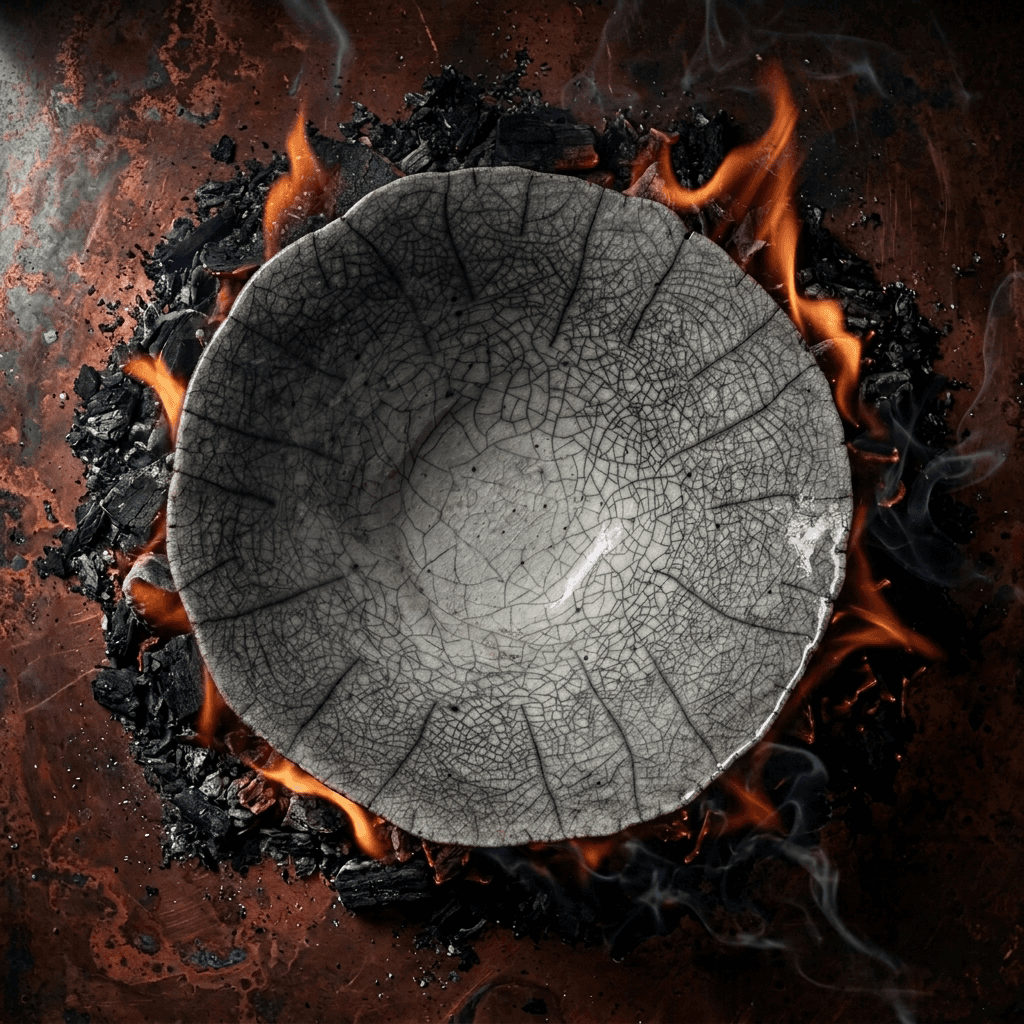
Raku is a rapid-firing ceramic technique in which glazed pots are pulled from the kiln red-hot and plunged straight into combustible material, producing crackled surfaces and metallic lustres found in no other firing method.
Where Raku Comes From
Raku began in 16th-century Japan, developed for tea ceremony bowls by the Chōjirō family under the guidance of tea master Sen no Rikyū. The word itself means something close to "enjoyment" or "ease." Traditional Japanese raku is quiet and deliberate — pots are removed from the kiln and simply allowed to cool in open air, without the dramatic reduction chamber most Western potters now associate with the technique.
What most people picture today — the theatrical pull from a roaring kiln, the flare of flame as a hot pot hits sawdust, the hiss of smoke — is Western raku, developed largely by American potter Paul Soldner in the 1960s. Soldner pushed the reduction stage further, using combustibles and open flame to create the metallic and crackle effects that define contemporary raku. That's the version taught at most workshops today, including mine.
How the Process Works
1. Bisque fire first — pieces are bisque-fired to around 950°C before any raku glaze goes on.
2. Glaze — raku glazes are formulated to mature quickly and craze intentionally; the crackle is a designed feature, not a flaw.
3. Fire fast and hot — the kiln reaches temperature quickly, often under an hour, until the glaze is glossy and fully melted.
4. Pull it red-hot — using long tongs, the piece comes straight out of the kiln while still glowing.
5. Reduce — the hot pot goes into a metal bin with sawdust, dry leaves, or shredded paper. The lid goes on, the material ignites, then starves of oxygen.
6. Smoke does the work — carbon from the smoke is pulled into every crack in the crazed glaze, turning them black, while unglazed clay picks up smoky, mottled tones.
7. Cool and clean — once cooled, pieces are scrubbed to reveal the finished surface underneath the soot.

Variations on the core technique include naked raku (a slip layer is peeled away after firing to leave crackle patterns on bare clay), horsehair raku (strands of horsehair laid on the hot pot sear into the surface, leaving fine black lines), and copper fuming (copper compounds in the reduction produce iridescent blues, pinks, and golds rather than the classic black-and-white crackle).
Is Raku Pottery Food Safe?
No. The rapid firing and reduction process leaves raku pottery porous and unable to hold water reliably, and traditional raku glazes aren't formulated for food contact. Raku pieces are decorative — vases, sculptural forms, wall pieces — not tableware.

What You Need to Try It
• Bisque-fired stoneware with a good amount of grog (roughly 10%+) — this helps the clay withstand the thermal shock of rapid heating and cooling
• Raku-specific glazes, or a willingness to leave sections unglazed for smoke effects
• A raku kiln — gas-fired, front-loading, and fast-heating, very different from a standard electric kiln
• Long tongs and heat-resistant gloves
• A metal reduction bin with a lid, and combustible material
• Closed shoes, natural-fibre clothing, and hair tied back — raku involves open flame and hot shards
This isn't something to attempt in a home kiln without the right equipment — it's why raku is almost always taught in a workshop setting with someone experienced managing the kiln and the reduction process.
Try It Yourself



I run raku firing workshops at my studio in Koringberg, in the Swartland — about an hour from Cape Town. Sessions range from a focused half-day "First Saturdays" firing to full weekend workshops combining raku with pit firing, saggar, and obvara. No experience is necessary; I provide the kiln, materials, and guidance, you bring the willingness to watch a glowing pot go into a bin of smoke and trust the process.
Frequently Asked Questions
Can beginners do raku?
Yes. It's a hands-on, guided process — you don't need prior pottery experience to take part in a firing, though bringing your own bisqueware means you'll need some hand-building or wheel-throwing background beforehand.
How hot does a raku kiln get?
Typically 950–1000°C at the point pieces are pulled — hot enough that the glaze is fully molten and glowing.
Why does raku crackle?
The glaze and clay body cool at different rates during the rapid temperature change, causing the glaze layer to crack. Smoke from the reduction stage gets drawn into those cracks and turns them black, creating the signature crackle pattern.
Is raku dangerous?
It involves open flame, very hot objects, and smoke, so it carries more risk than standard firing — but done with proper equipment, protective gear, and supervision, it's a manageable and well-established studio practice.
How long does a raku firing take?
A single piece can go from kiln to finished, cooled result in under an hour, though a full workshop day typically involves multiple firings and preparation time.