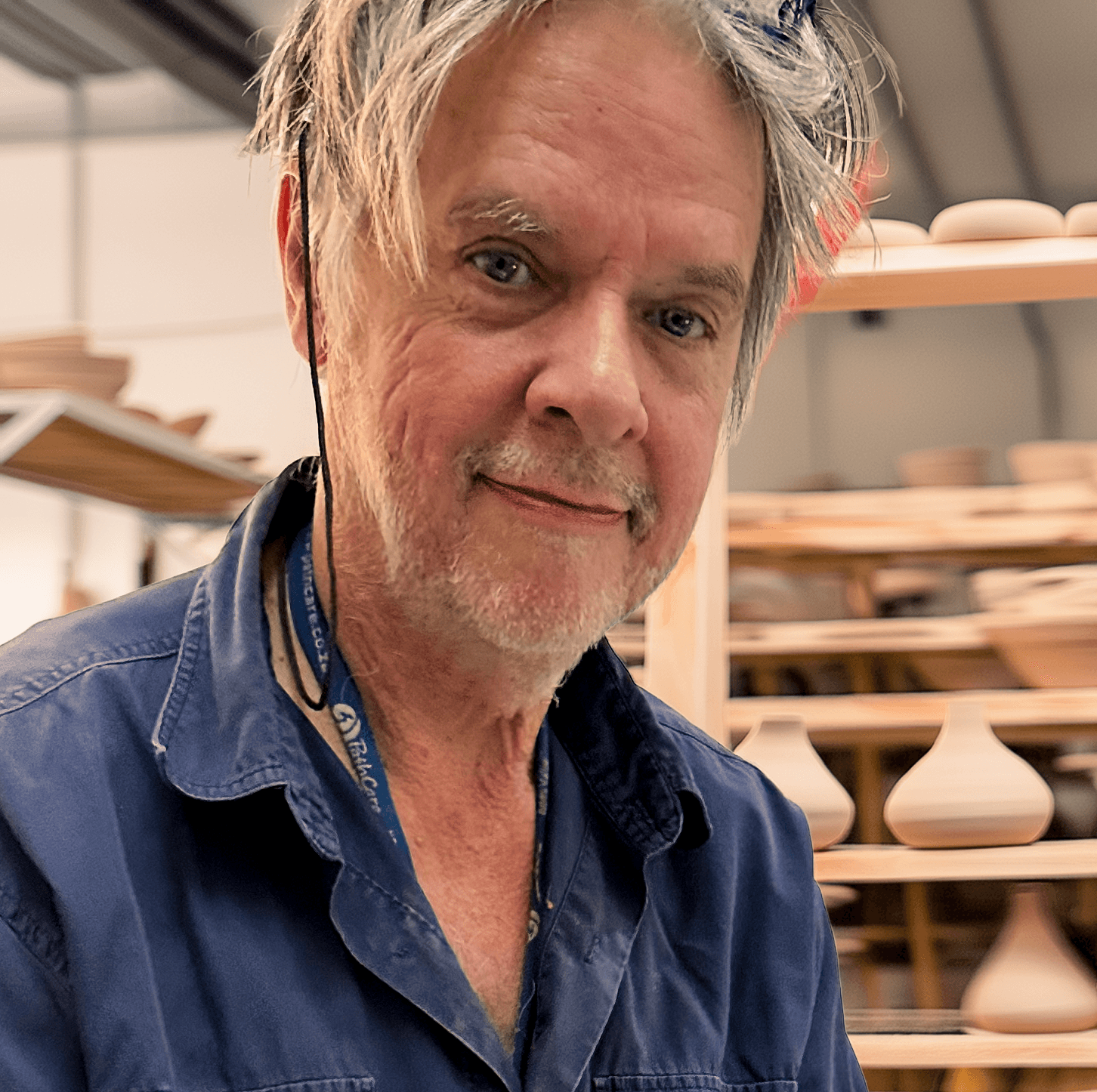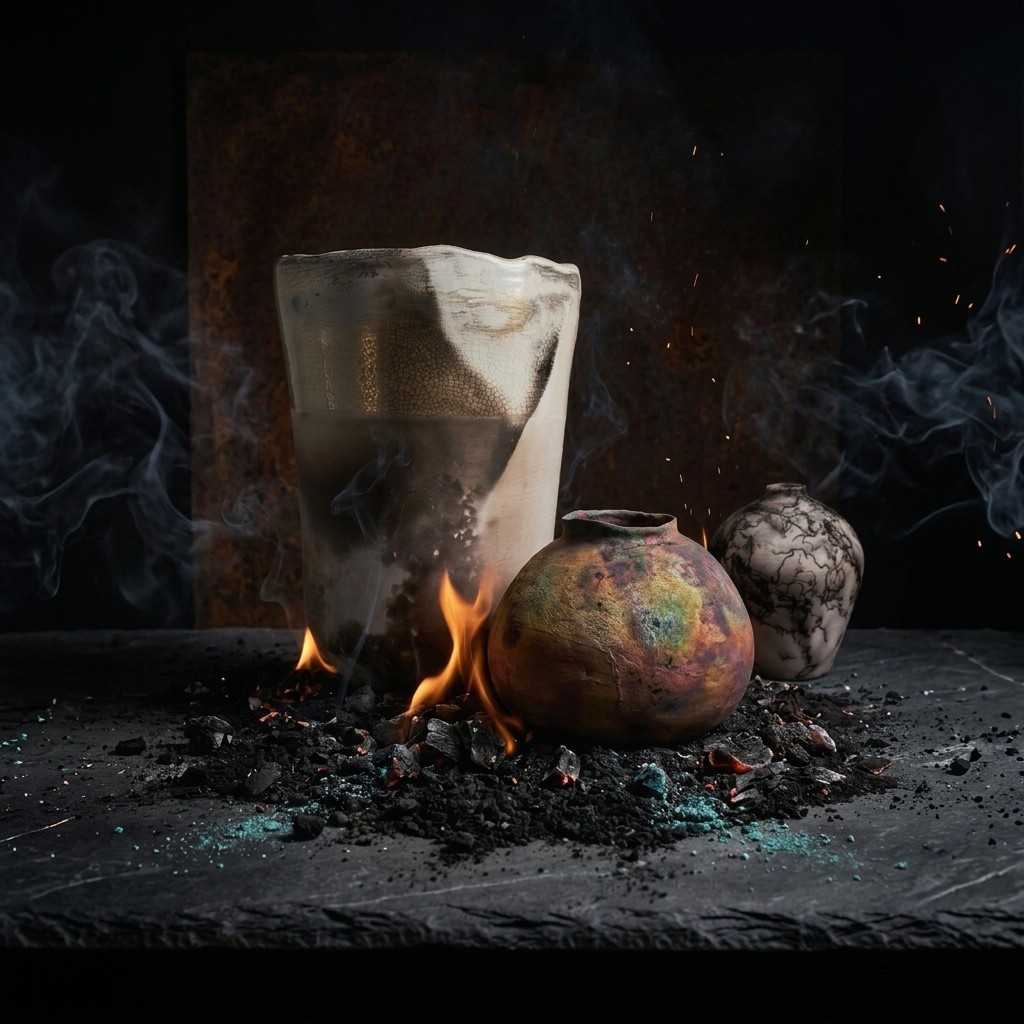
Raku & Pit fire Workshop: 23 - 25 October 2026 2026, Hosted by Leon Potgieter – Potterbakker, Koringberg, Swartland
This immersive three-day workshop explores alternative and Raku firing techniques through structured preparation, carefully paced firings, and shared learning.
The workshop begins on Friday, 23, at 14:00 and concludes on Sunday, 25, at 12:30.
Cost: R4,500 per person, R2,250 non-refundable deposit to secure your spot (breakfast, lunch, and dinner included). 8 spaces available.
For group bookings, please contact me to arrange and confirm availability.
Full payment or a R2,250 non-refundable deposit is required to secure your booking.
Payments can be made to the account below. Please use your name as a reference.
Please also fill in the contact form so that I can add you to the correct database for the event.
For payments, please WhatsApp me, and I will provide my banking details after verification of the request.
Location and Accommodation:
Koringberg is approximately an hour’s drive from Cape Town. Multiple Airbnb options are available in the village, as well as accommodation at the Miriam George Hotel.
Click on the links below for Koringberg accommodation.
Miriam George Hotel Koringberg
Important Information:
All techniques produce non–food-safe, porous work.
Participants may bring 1–3 bisque-fired pieces per firing for Raku and 1-4 works each for Pit firing & Saggar.
Maximum size for Raku works: grapefruit width, 15 cm height x 15 cm width.
Maximum size for Pit firing works: 30 cm height x 30 cm width.
Clay must be highly grogged stoneware (approximately 10 percent grog).
White clay bodies are strongly recommended, as results display more clearly than on darker bodies such as terracotta or black clay.
Unsuitable work may be excluded to protect other participants’ pieces.
Firings Included (5 firings):
Clean pit firing and Saggar (including ferric chloride/combustables) (overnight)
Raku matt copper fuming
Traditional white glaze Raku firing
Obvara firing
Participants will be divided into firing groups during Raku firings to ensure smooth rotation and safe kiln access.
If you don’t have any work of your own but would like to buy pre-made pieces, I’ll have a few options available on Friday. Prices will range from R50 to R200 per piece, depending on the size.
Workshop Schedule:
Friday – October 23
14:00 Welcome, introductions, safety briefing
15:00 Pit firing / Saggar and pit fire preparation
18:00 Dinner
19:00 Pit firing
Saturday – October 24
08:00 Breakfast
09:00 Pit fire unpacking and review
11:00 Preparation of Raku and copper fuming objects
12:00 Lunch
13:00 Traditional Raku firing
15:30 Raku copper fuming
18:00 Dinner
Sunday – October 25
08:00 Preparation for obvara firing
09:00 Obvara firing
11:30 Brunch
12:30 Farewell
———————————————————————————————————————————————
Firing / Materials Guide
This guide explains exactly how to prepare your work and what materials are used in each firing.
All firing materials, glazes, chemicals, and additives are provided as part of the workshop.
General Requirements
All work must be bisque-fired.
All results are non–food-safe and porous.
Maximum size per piece: grapefruit width, 15 cm height.
Clay body must be highly grogged stoneware (approximately 10 percent grog).
White clay bodies are strongly recommended.
Each participant may fire up to 3 pieces per Raku kiln firing. If the group is fewer than 5 participants, I will let everyone know they can bring 3-4 works. Photographs of work to be fired must be sent to me via WhatsApp 2 days before the workshop, so I can review and make suggestions if I observe any issues.
For pit firing, you may fire up to 4 Saggar pieces and 4 pieces for standard pit-fired works. Larger pieces up to 30 cm are permitted; however, keep in mind that the bigger the piece, the higher the risk of cracking or explosion.
Firing and Materials
Pit Firing (Overnight)
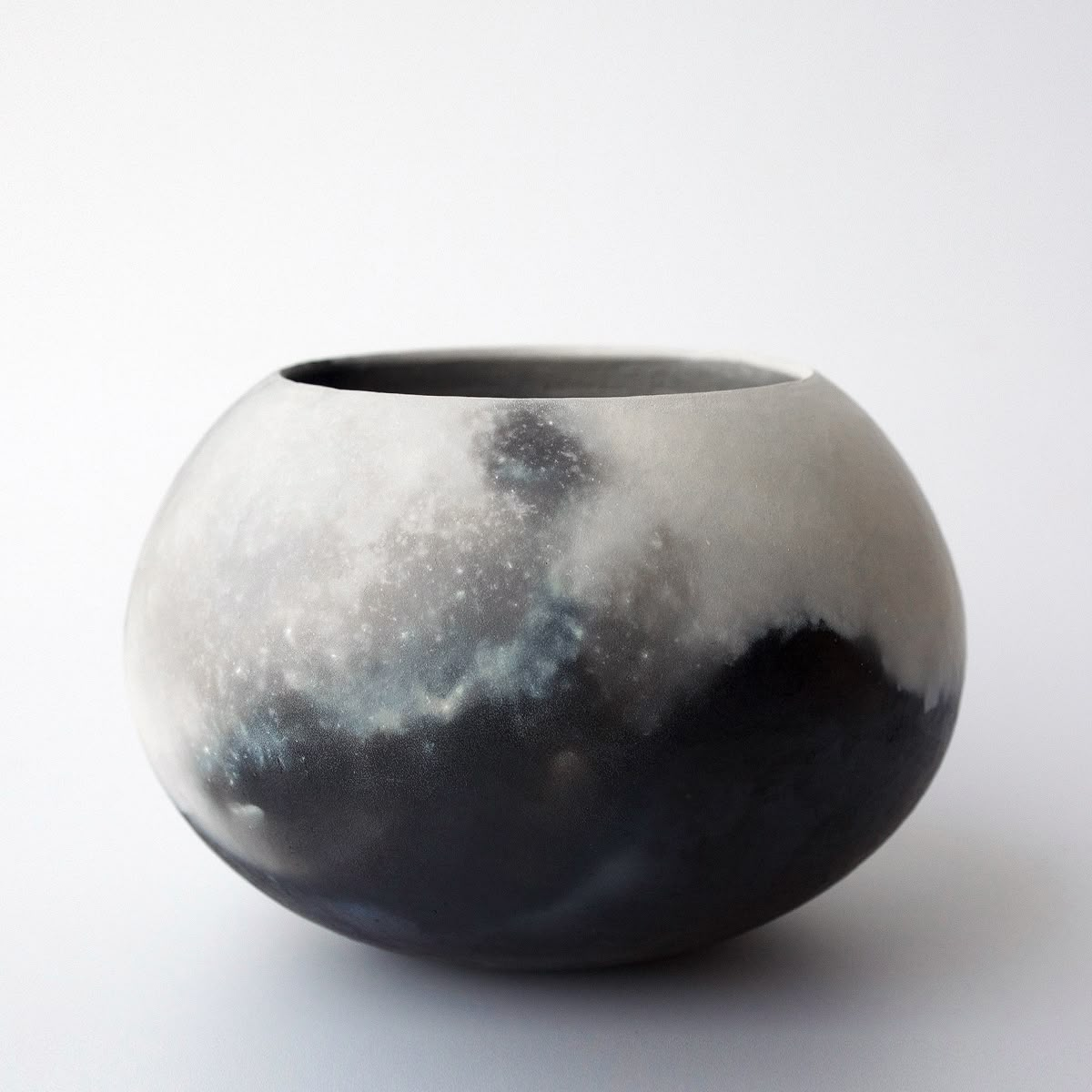
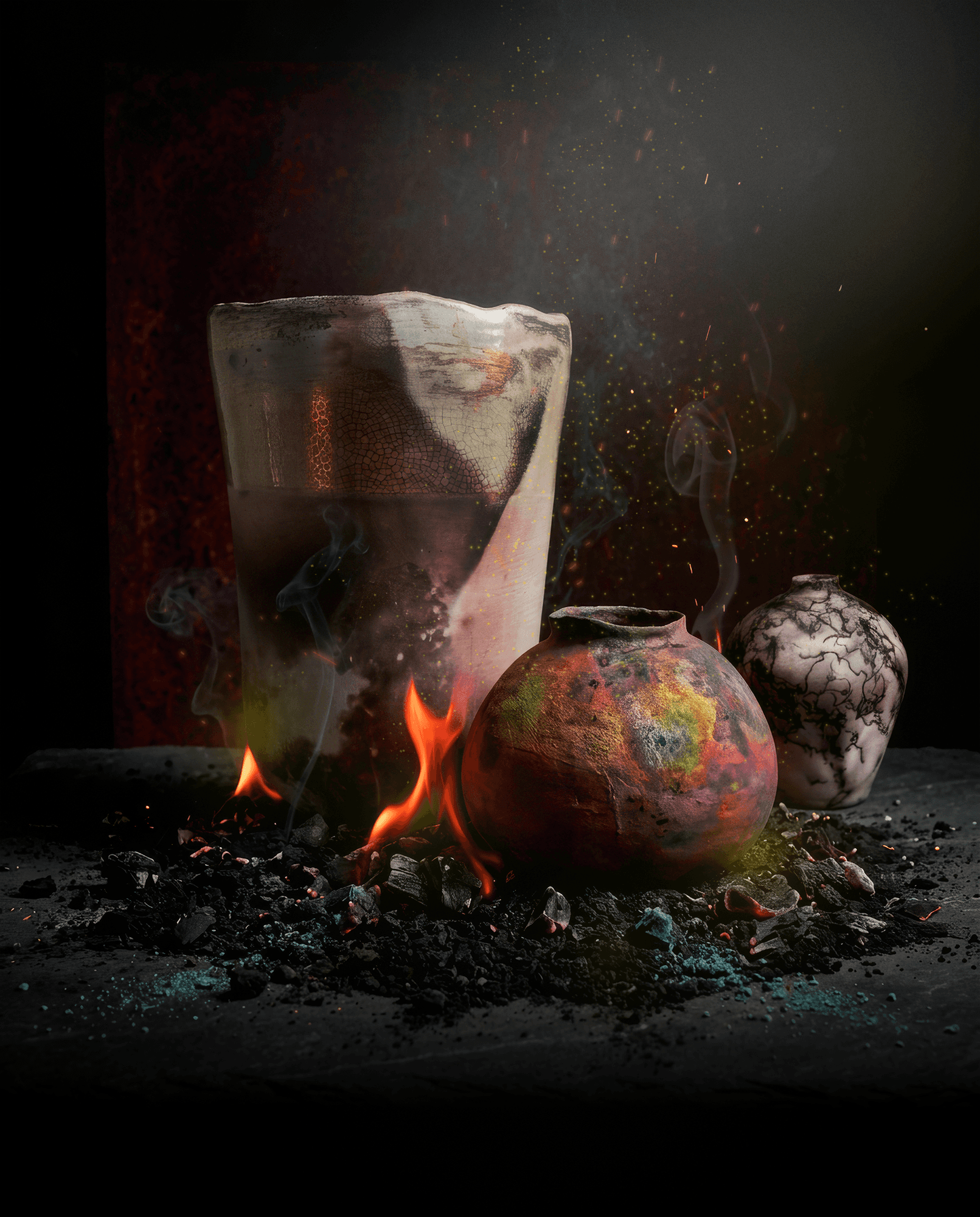
Materials used: wood, ash, sawdust, charcoal, organic plant material, copper wire, copper carbonate or oxide, and salts.
Surface effects: smoke blackening, earthy tones, flashing, organic markings.
Pot preparation: no glaze; burnished, terra sigillata, or smooth raw clay surfaces.
Saggar Firing (Including Ferric Chloride)
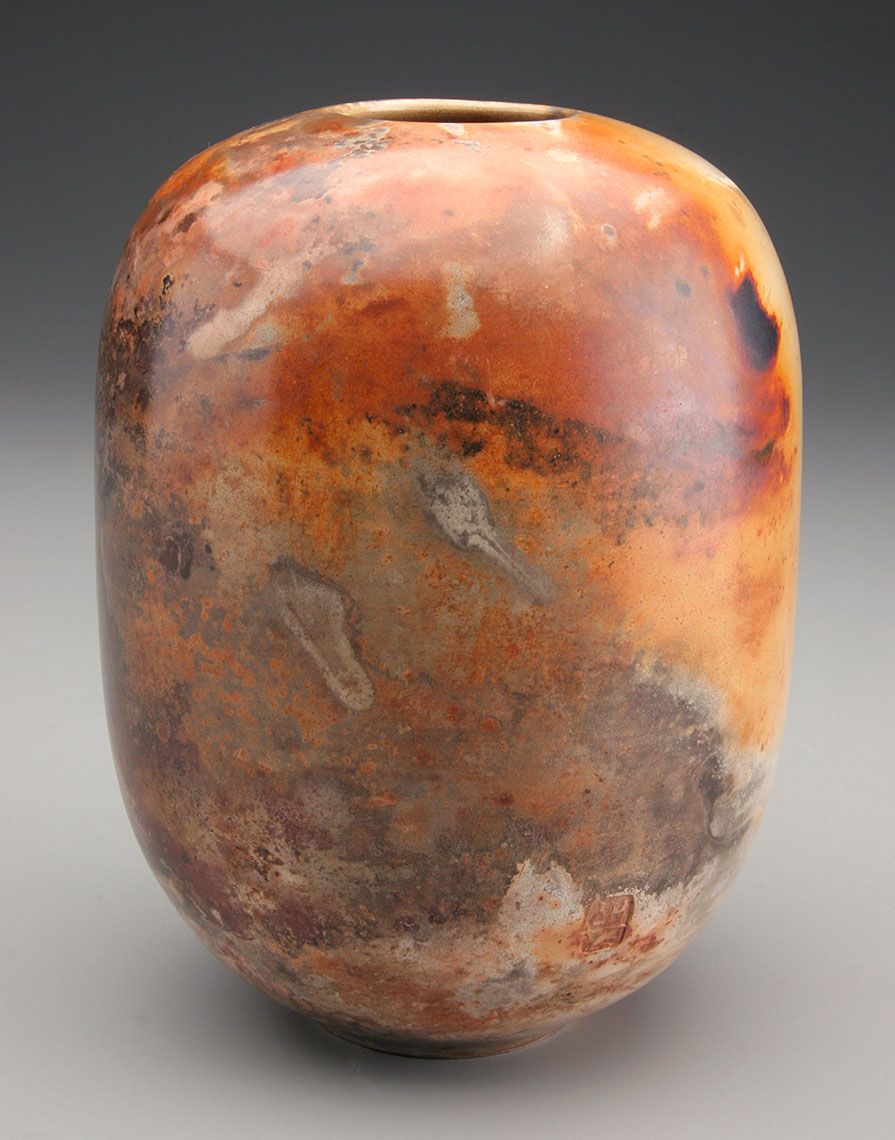 | 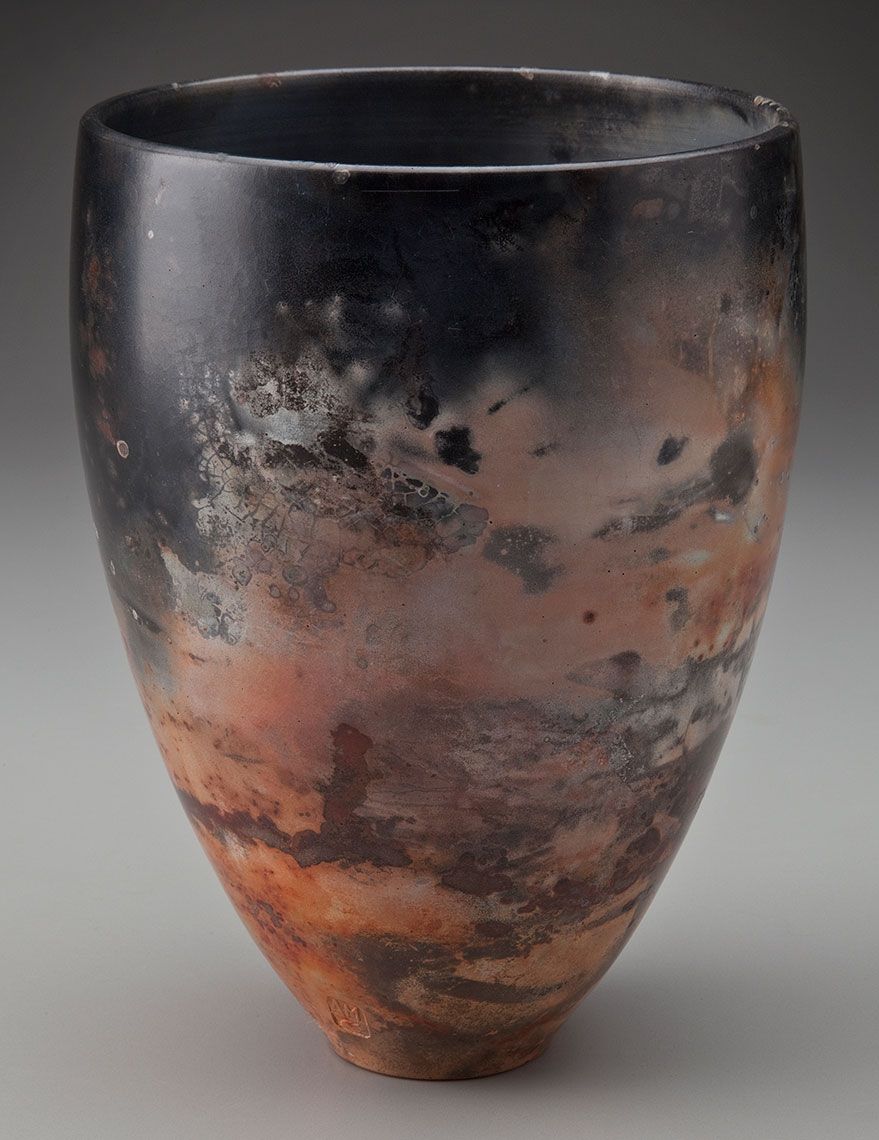 |
Materials used: ferric chloride, copper wire, copper carbonate or oxide, salts, steel wool, sawdust, organic materials.
Surface effects: rust tones, flashing, soft staining, layered atmospheric effects.
Pot preparation: no glaze; burnished or terra sigillata surfaces preferred.
Naked Raku & Raku Copper Firing
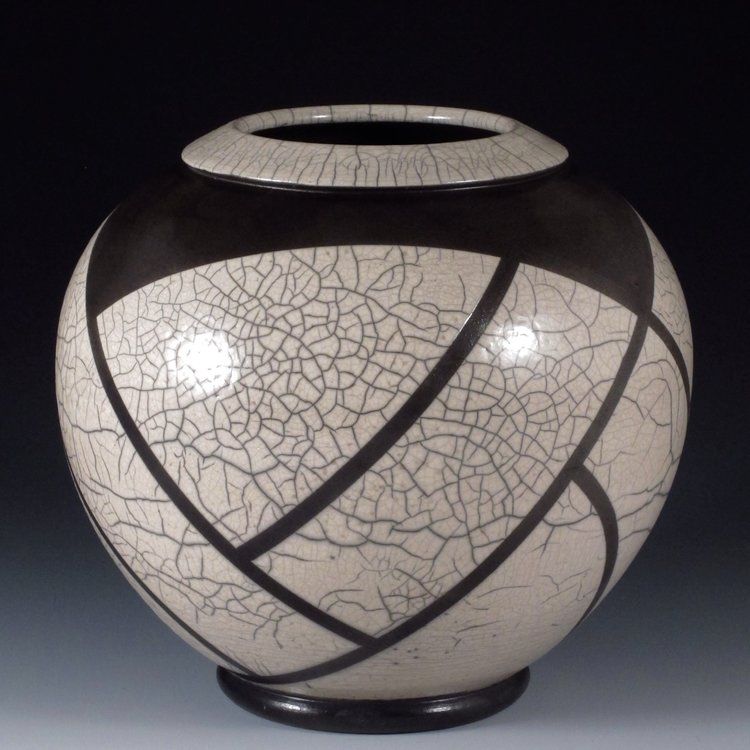 | 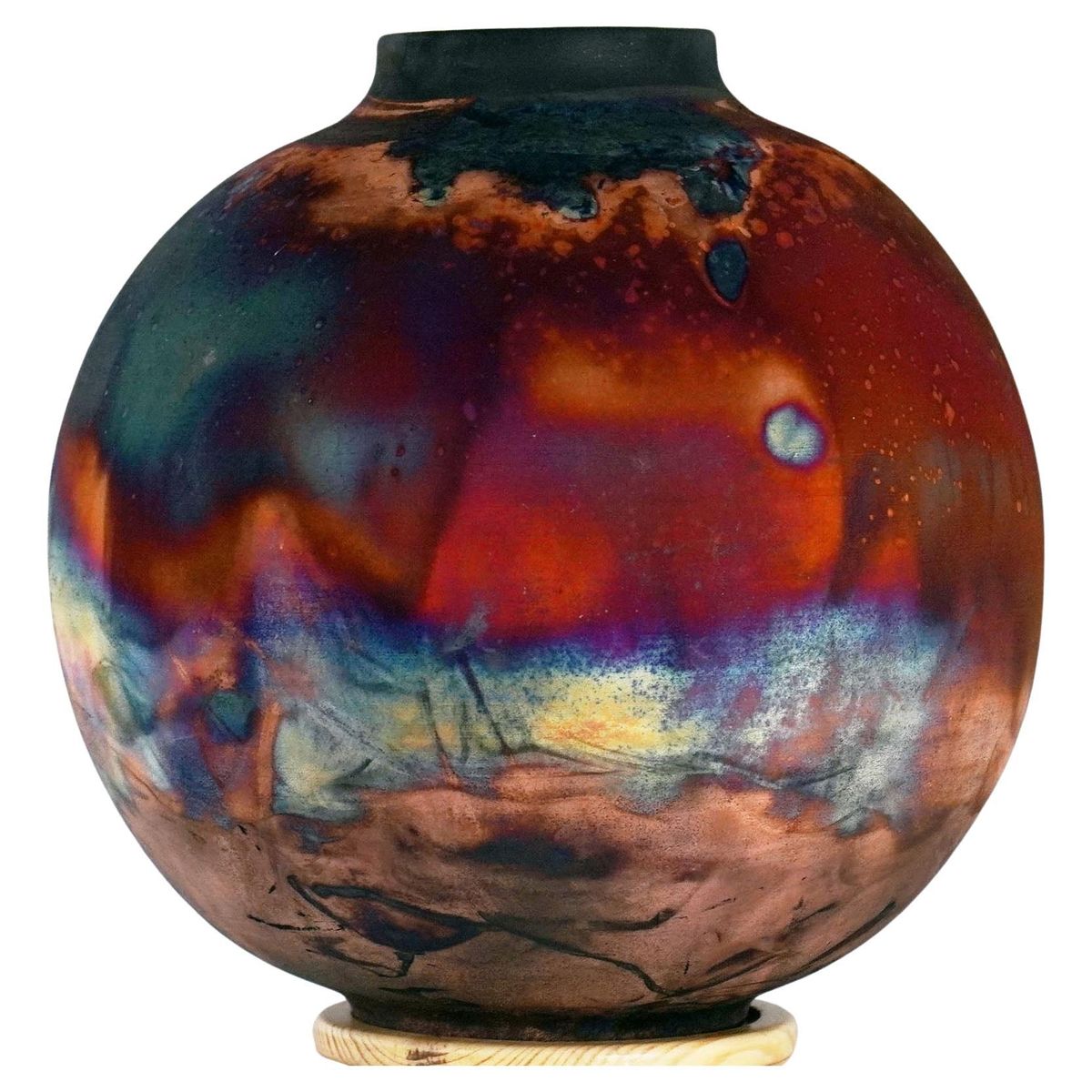 |
Materials used: copper-based raku glazes and reduction materials.
Surface effects: metallic flashes, iridescence, crackle, smoke effects.
Pot preparation: bisque-fired only; glazes applied during the workshop.
Traditional Raku with Horsehair and Feathers
Materials used: horsehair, feathers.
Surface effects: carbon lines, feather impressions, smoky halos.
Pot preparation: no glaze; highly polished, burnished, or terra sigillata surfaces.
Obvara Firing
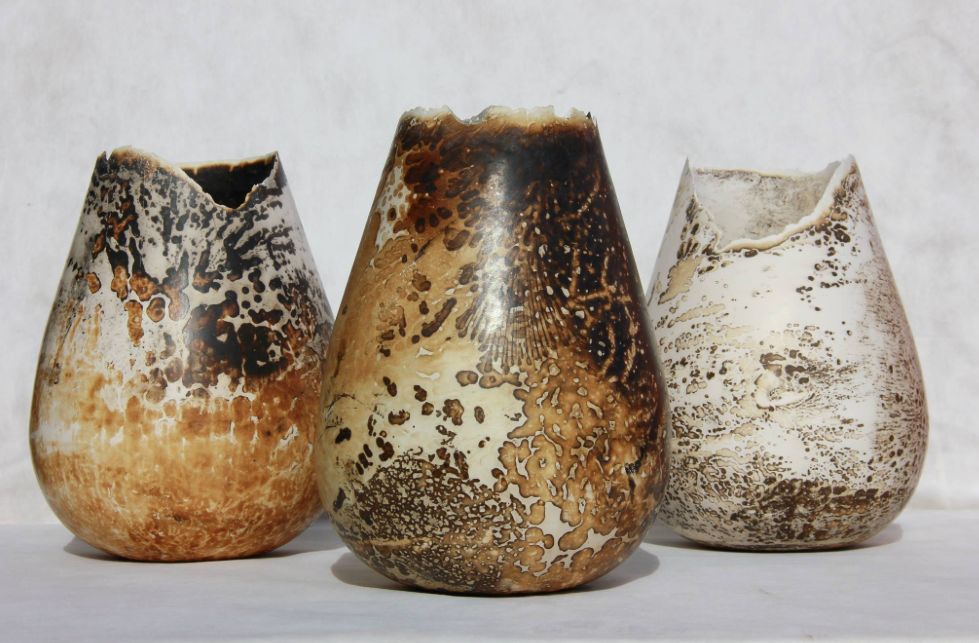
Materials used: fermented obvara mixture and water.
Surface effects: mottled browns, creams, organic patterning.
Pot preparation: no glaze; smooth or lightly textured surfaces.
What not to bring
Glazes or chemicals.
Oversized or heavy work.
More than 3 pieces per Raku firing.
Functional ware intended for food use.
Clothing and Safety
Closed shoes are mandatory.
Natural-fibre clothing suitable for heat and smoke.
Gloves recommended.
Hair tied back.
Firing groups will be assigned on arrival and remain consistent throughout the weekend.
Happy students