" width="40px"><path d="M 0 38.827 L 0 0 L 40 0 L 40 38.827 Z" fill="transparent" height="38.827098163108104px" id="UxiDibz_m" transform="translate(0 1.173)" width="40px"/><path d="M 40 0 L 40 40 L 0 40 L 0 0 Z M 38.517 1.588 L 1.483 1.588 L 1.483 38.4 L 38.517 38.4 Z M 20 11.684 C 24.602 11.684 28.333 15.415 28.333 20.017 C 28.333 24.62 24.602 28.351 20 28.351 C 15.398 28.351 11.667 24.62 11.667 20.017 C 11.667 15.415 15.398 11.684 20 11.684 Z" fill="rgb(0, 0, 0)" height="40px" id="opENEIgot" transform="translate(0 0)" width="40px"/></g></svg>)
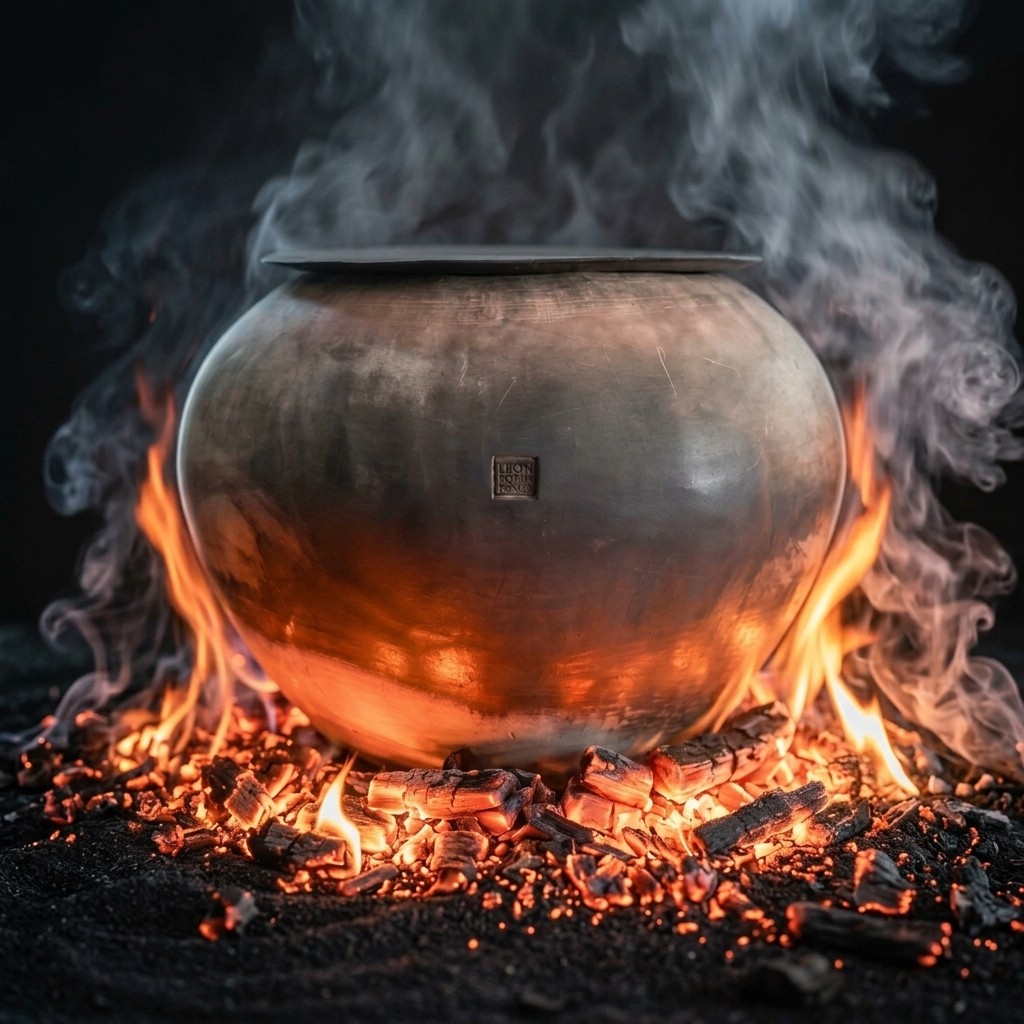
Pit firing is one of the oldest ceramic firing methods in existence — pots are buried or nested in a shallow pit lined with combustible material, then set alight and left to burn down over several hours. There's no kiln, no electricity, no gas — just clay, fuel, and fire, producing smoky, flame-licked surfaces in warm earth tones that no glaze can replicate.
Where Pit Firing Comes From
Pit firing predates the kiln itself. Long before potters had any way to enclose and control a fire, this was simply how pottery was fired — a pit or open bonfire, unglazed clay, and whatever fuel was on hand. Traditions using this method exist independently across nearly every pottery-making culture on earth, from Indigenous American pueblo pottery to African village firing to prehistoric European ceramics, each developing their own local variations on the same basic idea.
Contemporary studio pit firing borrows the ancient method but applies it with more intention: potters now choose specific combustibles and mineral additions deliberately, aiming for particular colour and marking effects rather than simply getting the pot hard-fired. It sits alongside raku and saggar firing as one of the core "alternative firing" techniques, distinguished by its low-tech, open-air character — there's no lid, no reduction chamber, just an open burn.

How the Process Works
1. Bisque fire first — the piece needs to already be bisque-fired before it goes anywhere near the pit.
2. Prepare the surface — burnished clay or a terra sigillata coating takes the smoke and flame markings far more vividly than a rough, unburnished surface.
3. Dig or prepare the pit — a shallow trench or hole in the ground, sized to the pieces being fired, sometimes lined with bricks or stone for wind protection and heat retention.
4. Layer in the fuel and pots — a base layer of combustible material, then pots nestled in with more fuel and colourant materials packed around and between them.
5. Light it and let it burn — the fire is lit and left to burn down naturally, typically taking several hours from ignition to embers.
6. Cool completely and dig out — pots must cool fully before handling to avoid thermal shock, then are uncovered from the ash and fuel bed, each one marked uniquely by exactly where it sat and what touched it.

What Creates the Colour and Marking
• Sawdust and wood shavings — the base fuel, producing smoky black and grey tones
• Copper carbonate — reds, oranges, and greens where it contacts the clay
• Salt — flashing and blushing effects
• Banana skins, seaweed, or dried leaves — organic material adding subtle colour variation
• Horse or cow dung — a traditional fuel in many pit-firing cultures, valued for even, long burning
Is Pit-Fired Pottery Food Safe?
No. Pit-fired pieces are unglazed and highly porous, with no food-safe barrier of any kind. Like raku and saggar work, these are decorative and sculptural pieces, not tableware.
What You Need to Try It
• Bisque-fired stoneware, ideally burnished or with a terra sigillata surface
• A pit, trench, or fireproof container to hold the fire
• Fuel: sawdust, wood shavings, dried plant material
• Colourants: copper carbonate, salt, or other mineral additions
• A safe, open outdoor space with fire safety equipment on hand
Patience is the real skill in pit firing — a full firing, start to finish including cooling, can take the better part of a day, and results depend heavily on fuel choice and placement, which only comes with practice.
Try It Yourself

I run pit firing workshops at my studio in Koringberg, in the Swartland, about an hour from Cape Town — frequently paired with raku or saggar firing across a weekend. No experience is necessary; I provide the site, fuel, and materials, and guide you through building and packing your own firing.
Frequently Asked Questions
Can beginners do pit firing?
Yes. It's one of the most accessible alternative firing methods — no kiln operation, no red-hot pulls, mostly patience and careful fuel arrangement.
How is pit firing different from raku?
Raku involves a kiln, glazed pots pulled red-hot and rapidly reduced in a sealed container. Pit firing uses no kiln at all — pots are unglazed, buried in fuel in an open pit, and burned slowly over hours rather than fired and pulled in minutes.
How is pit firing different from saggar firing?
They're closely related — both use unglazed pots packed with colourant materials. Saggar firing uses a sealed, lidded container and a kiln for controlled low firing; pit firing is a completely open, unenclosed burn with no kiln involved at all.
How hot does a pit fire get?
Considerably lower and less consistent than a kiln firing — typically 600–900°C, varying significantly through the burn and across the pit.
How long does a pit firing take?
A full cycle, including burn-down and cooling before the pots can be safely handled, typically runs 6–12 hours, often left overnight.