" width="40px"><path d="M 0 38.827 L 0 0 L 40 0 L 40 38.827 Z" fill="transparent" height="38.827098163108104px" id="UxiDibz_m" transform="translate(0 1.173)" width="40px"/><path d="M 40 0 L 40 40 L 0 40 L 0 0 Z M 38.517 1.588 L 1.483 1.588 L 1.483 38.4 L 38.517 38.4 Z M 20 11.684 C 24.602 11.684 28.333 15.415 28.333 20.017 C 28.333 24.62 24.602 28.351 20 28.351 C 15.398 28.351 11.667 24.62 11.667 20.017 C 11.667 15.415 15.398 11.684 20 11.684 Z" fill="rgb(0, 0, 0)" height="40px" id="opENEIgot" transform="translate(0 0)" width="40px"/></g></svg>)
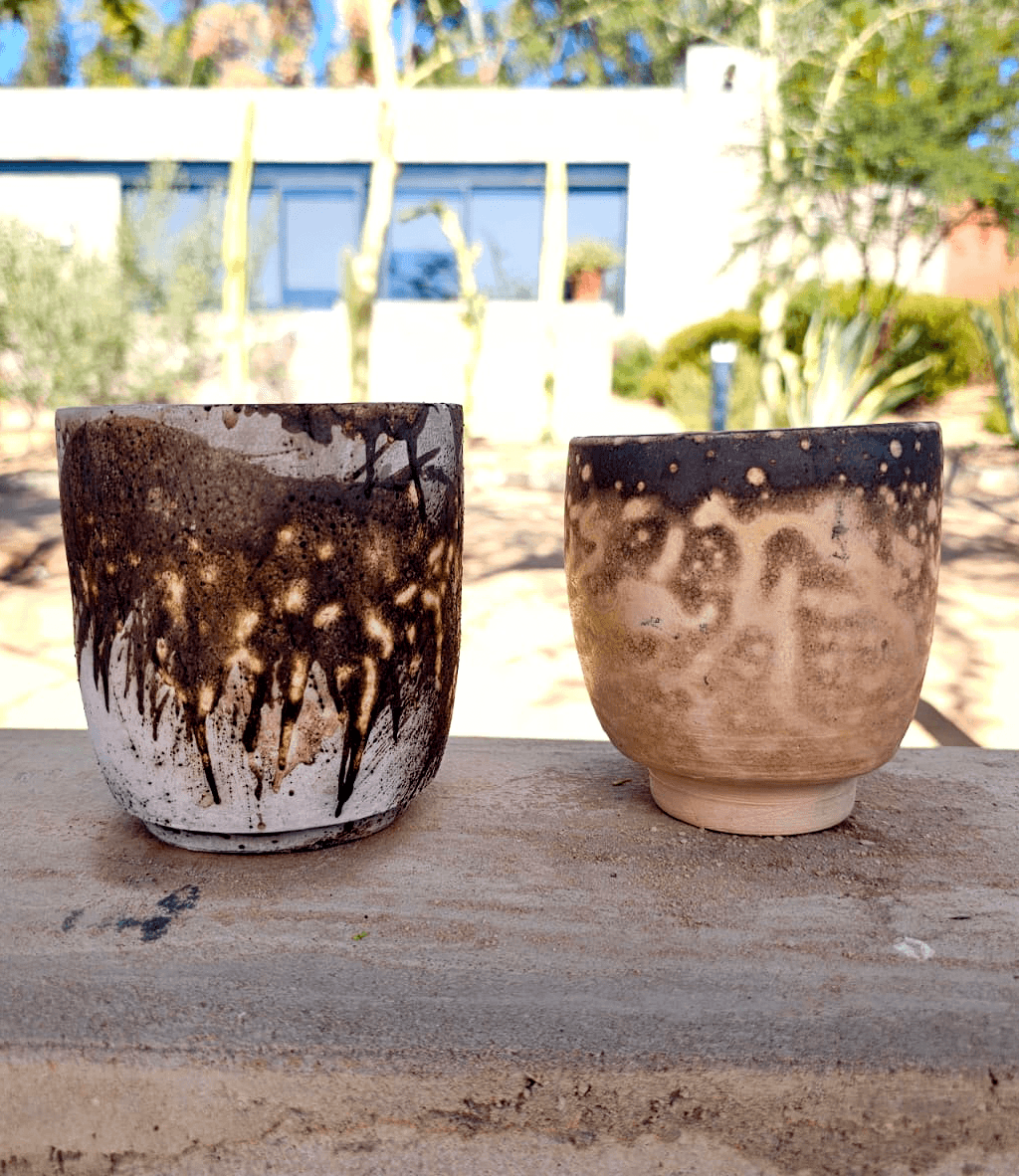
Obvara is a traditional Eastern European firing technique in which a red-hot, unglazed pot is dipped straight into a fermented flour-and-water mixture, producing spontaneous tear-drop patterns, splashes, and organic markings as the batter scorches instantly onto the surface. It's one of the gentler alternative firing techniques — no combustible reduction, no smoke chamber, just fire, fermentation, and a very fast dip.
Where Obvara Comes From
Obvara has its roots in Slavic folk pottery traditions, particularly associated with Belarus, Ukraine, and parts of Russia, where it was traditionally used to make everyday water jugs and cooking vessels more durable and water-resistant. The word itself relates to "boiling" or "scalding" in Slavic languages, referring directly to the moment the hot pot meets the liquid. Historically, the fermented mixture — often based on rye flour left to sour — served a genuinely practical purpose beyond decoration: the reaction with the hot clay created a thin, slightly sealed surface.
Contemporary studio ceramicists have adopted obvara primarily for its striking aesthetic rather than its original practical function, drawn to the unpredictable, organic patterns it produces — something closer to ink dropped in water or tea leaves settling than a controlled glaze effect.
How the Process Works
1. Bisque fire first — the piece must be bisque-fired before firing for obvara.
2. Prepare the obvara mixture — flour (traditionally rye) mixed with water and left to ferment for several days until properly soured; some potters add yeast to speed fermentation.
3. Fire the piece hot — the bisqueware is fired in a kiln to a high temperature, similar to raku range, until glowing.
4. Pull it red-hot — using tongs, the piece comes straight out of the kiln while still glowing.
5. Dip it immediately — the hot pot is plunged directly into the fermented obvara mixture for only a second or two; the reaction is instantaneous.
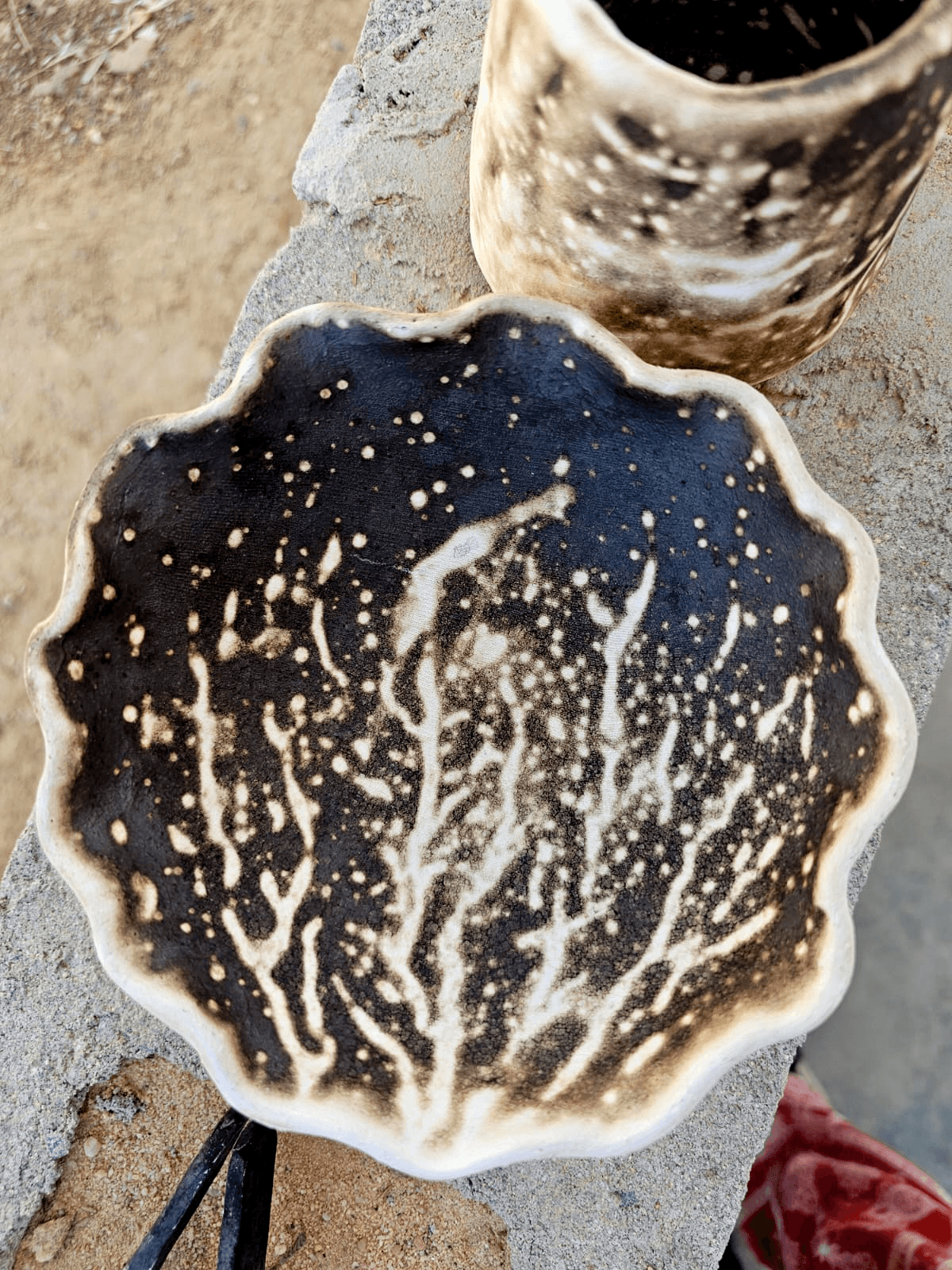
6. Let it react and clean up — the scorched batter clings to the surface in the pattern created by the dip; once cool, excess residue is gently cleaned away to reveal the tear-drop and splash markings underneath.
What Creates the Markings
• Dip angle and speed — how the pot enters the liquid shapes where drips and splashes form
• Fermentation strength — a more fully soured mixture reacts more vigorously against the hot clay
• Surface preparation — burnished or terra sigillata surfaces take the markings more crisply than rough bisque
• Pot shape — curves, shoulders, and rims all catch and channel the liquid differently, so the same dip technique produces different results on different forms
Is Obvara-Fired Pottery Food Safe?

No. Despite obvara's historical connection to functional water vessels, contemporary studio obvara pieces are unglazed and porous, and are not intended for food or liquid use. Like raku, saggar, and pit-fired work, these are decorative and sculptural pieces.
What You Need to Try It
• Bisque-fired stoneware, burnished or with a terra sigillata surface for the clearest markings
• A fermented flour-and-water mixture, prepared several days in advance
• A kiln capable of firing to raku-range temperatures
• Long tongs and heat-resistant gloves
• A container for the obvara mixture large enough to dip your piece fully or partially
The fermentation step is the one part of obvara that can't be rushed — the mixture needs several days to properly sour before it will react correctly against hot clay.
Try It Yourself


I run obvara workshops at my studio in Koringberg, in the Swartland, about an hour from Cape Town — often paired with raku copper fuming in the same workshop day. No experience is necessary; I prepare the fermented mixture in advance and guide you through the firing and dipping process.
Frequently Asked Questions
Can beginners do obvara?
Yes. The dip itself is quick and straightforward to learn, though it benefits from guidance the first few times to get a feel for timing and angle.
Is obvara related to raku?
They share a similar firing temperature and both involve a hot-pull moment, but obvara uses no combustible reduction chamber — the effect comes entirely from the fermented mixture reacting against the hot clay, not from smoke or carbon.
What does the fermented mixture smell like?
Distinctly sour, similar to sourdough starter — this is expected and is exactly what makes it react properly against the hot pot.
Why does obvara make tear-drop shapes?
The scorching batter runs briefly under gravity in the instant before it fully sets onto the hot surface, leaving elongated, drip-like marks that taper as they run.
How long does an obvara firing take?
The firing and dip itself takes under an hour per piece, similar to raku, though the fermented mixture needs several days of advance preparation before a workshop.