" width="40px"><path d="M 0 38.827 L 0 0 L 40 0 L 40 38.827 Z" fill="transparent" height="38.827098163108104px" id="UxiDibz_m" transform="translate(0 1.173)" width="40px"/><path d="M 40 0 L 40 40 L 0 40 L 0 0 Z M 38.517 1.588 L 1.483 1.588 L 1.483 38.4 L 38.517 38.4 Z M 20 11.684 C 24.602 11.684 28.333 15.415 28.333 20.017 C 28.333 24.62 24.602 28.351 20 28.351 C 15.398 28.351 11.667 24.62 11.667 20.017 C 11.667 15.415 15.398 11.684 20 11.684 Z" fill="rgb(0, 0, 0)" height="40px" id="opENEIgot" transform="translate(0 0)" width="40px"/></g></svg>)
Barrel firing is a close cousin of pit firing that uses a metal drum — typically an old oil or steel barrel — as the fire chamber instead of a hole dug in the ground. Pots are packed inside the barrel with fuel and colourant materials, and the whole thing is set alight and burned down, producing the same kind of smoky, flame-marked surfaces as pit firing, but with a more contained, repeatable, and portable setup.
Where Barrel Firing Comes From
Barrel firing is a relatively modern adaptation of ancient pit-firing traditions, developed as studio potters looked for a more practical, controllable version of the open-pit method. Digging a new pit for every firing isn't always feasible — especially for potters without unrestricted outdoor space — and a steel barrel solves that problem neatly: it's reusable, it can be moved, and its enclosed shape holds heat more efficiently than an open pit, meaning more consistent results firing to firing.
The core technique remains the same ancient idea underlying pit firing — direct, low-tech contact between flame, fuel, and unglazed clay — just housed in a container built for the job rather than dug from the earth.
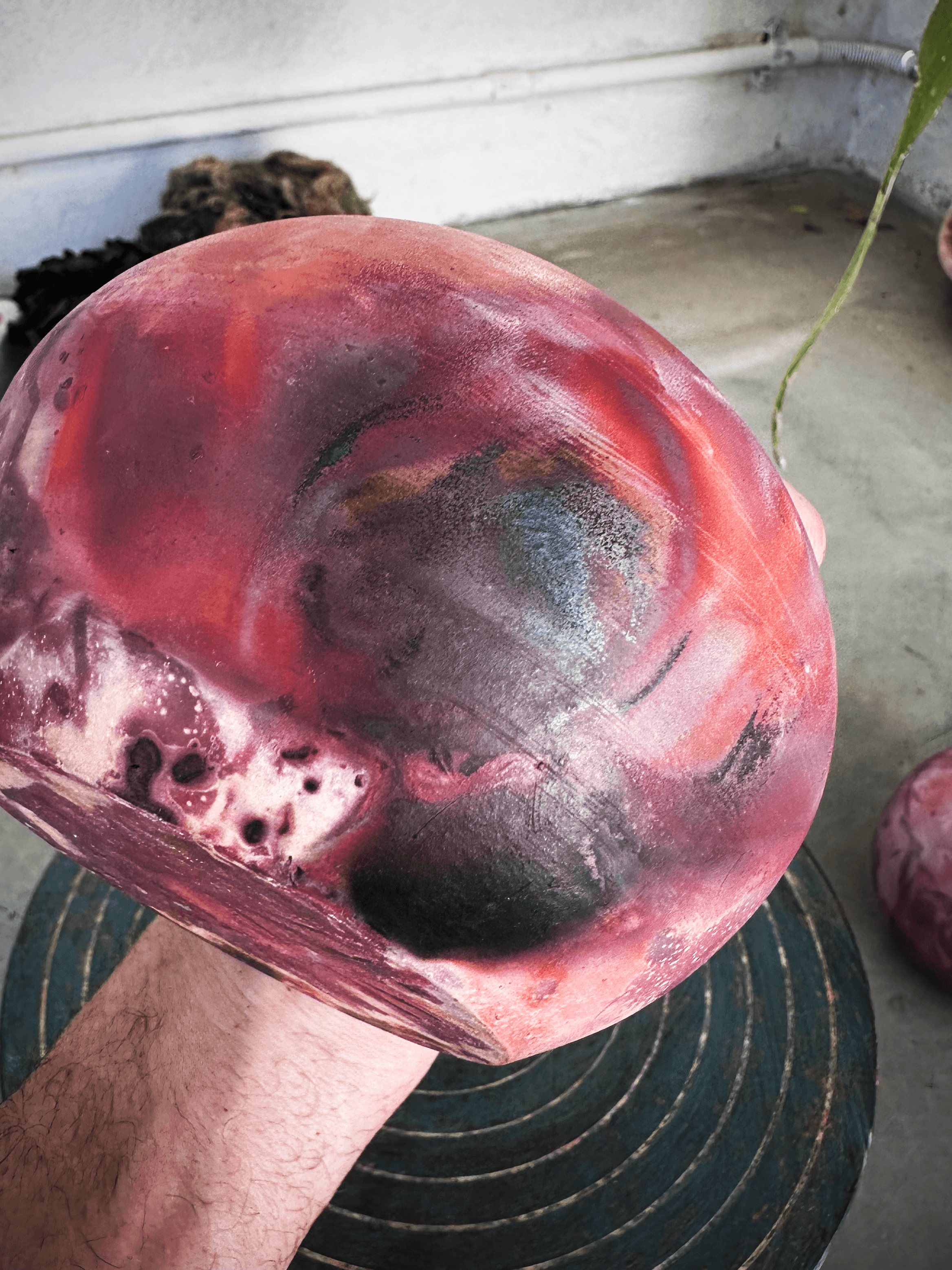
How the Process Works
1. Bisque fire first — as with pit firing, pieces must already be bisque-fired before going into the barrel.
2. Prepare the surface — burnished clay or terra sigillata takes flame and smoke markings far more vividly than unburnished bisque.
3. Prepare the barrel — a metal drum, often with holes drilled for airflow, sometimes standing upright, sometimes on its side depending on the potter's setup.
4. Layer in fuel and pots — a base layer of combustible material, pots nestled among it, more fuel and colourants packed in and around them.
5. Light it and let it burn — the barrel is set alight and left to burn down, typically over several hours, sometimes with airflow adjusted via the drilled holes to control burn speed.
6. Cool completely and unpack — as with pit firing, pieces need to cool fully in the barrel before handling; then pots are lifted out of the ash and spent fuel, each one marked by its exact position within the barrel.
What Creates the Colour and Marking
• Sawdust and wood shavings — the base fuel, producing smoky blacks and greys
• Copper carbonate — reds, oranges, and greens on contact
• Salt — flashing and blush tones
• Seaweed, banana skins, or dried leaves — subtle organic colour variation
• Dung or other traditional slow-burning fuels — even, sustained heat
Is Barrel-Fired Pottery Food Safe?

No. Like pit-fired work, barrel-fired pieces are unglazed and porous, made for decorative and sculptural purposes rather than food or liquid use.
What You Need to Try It
• Bisque-fired stoneware, ideally burnished or with a terra sigillata surface
• A metal barrel or drum, prepared with airflow holes if desired
• Fuel: sawdust, wood shavings, dried plant material
• Colourants: copper carbonate, salt, or other mineral additions
• A safe, open outdoor space with fire safety equipment on hand
Because a barrel holds heat and airflow more consistently than an open pit, potters often find barrel firing gives slightly more even, repeatable results across multiple pieces in the same burn — useful for anyone building a body of work rather than firing one-off pieces.
Try It Yourself

I run barrel firing workshops at my studio in Koringberg, in the Swartland, about an hour from Cape Town — often alongside raku or saggar firing across a weekend session. No experience is necessary; I provide the barrel, fuel, and materials, and guide you through packing and firing your own barrel load.
Frequently Asked Questions
Can beginners do barrel firing?
Yes. Like pit firing, it's mostly about careful packing and patience rather than any complex technical skill.
How is barrel firing different from pit firing?
They use the same basic principle — unglazed pots burned directly in contact with fuel and colourants — but barrel firing uses a metal drum instead of a dug pit, giving more consistent heat retention, better portability, and more repeatable results between firings.
How hot does a barrel firing get?
Similar to pit firing, typically 600–900°C, though the enclosed barrel shape can hold heat somewhat more evenly than an open pit.
Can the same barrel be reused for multiple firings?
Yes — this is one of barrel firing's main practical advantages over digging a new pit each time. A well-maintained barrel can be used repeatedly over many firings.
How long does a barrel firing take?
A full cycle including burn-down and cooling before pieces can be safely handled typically runs 6–12 hours, often left overnight, similar to pit firing.